There is no archive of odour to train on. It has to be measured — on site, in the air that actually matters. ADVENT builds the instrument that makes smell measurable and the models that read it, so olfaction becomes a data layer instead of a missing sense.

What is an electronic nose
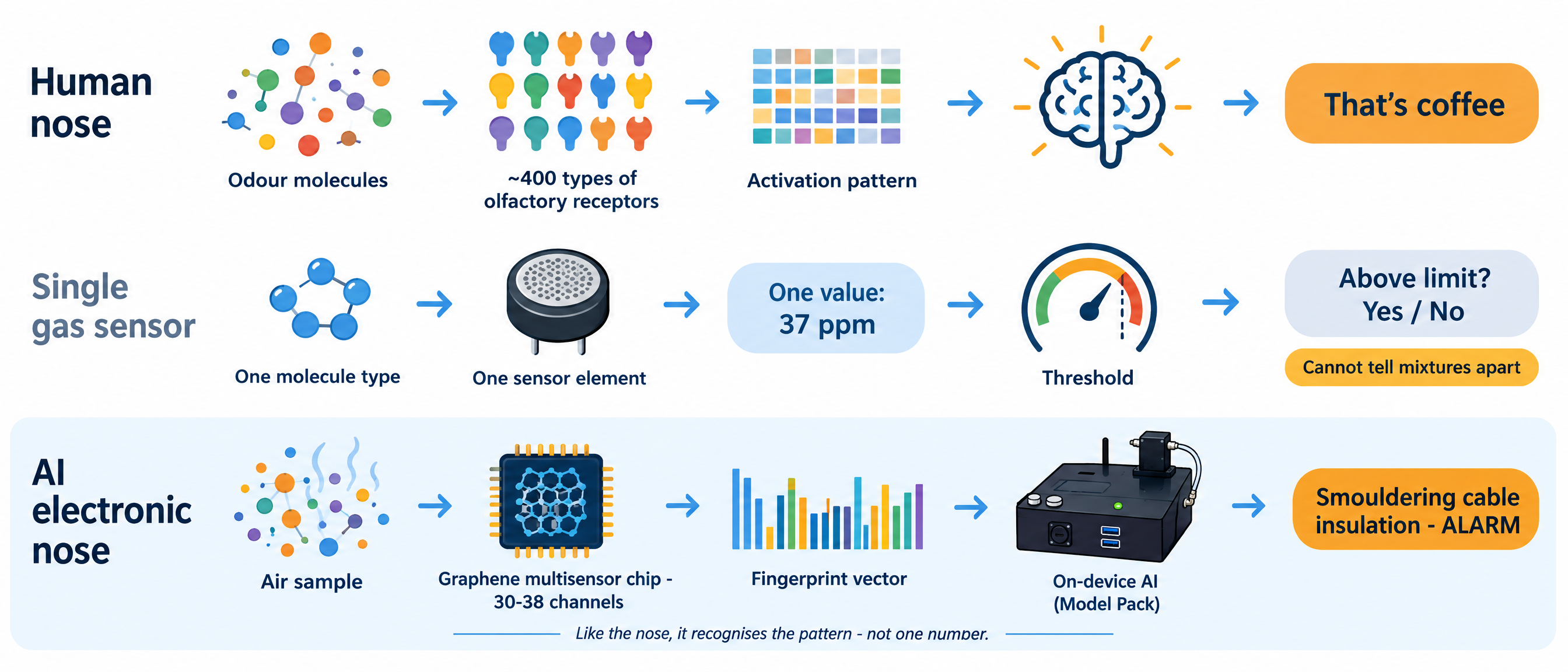
Your nose does not measure one chemical. Around 400 types of olfactory receptors respond to a smell together, and the brain recognises the pattern. An AI electronic nose works the same way: an array of differently treated sensing cells responds to the air at once, and an AI model recognises that pattern as a specific odour — smouldering cable, a wastewater leak, a batch that has drifted. A single gas sensor, by contrast, reports one number for one gas and cannot tell a mixture apart.
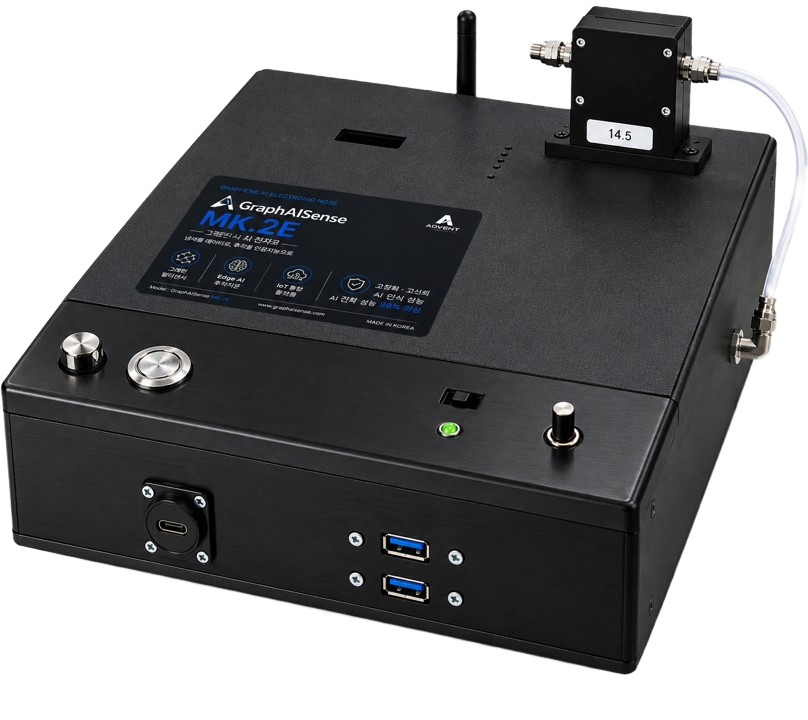
The instrument
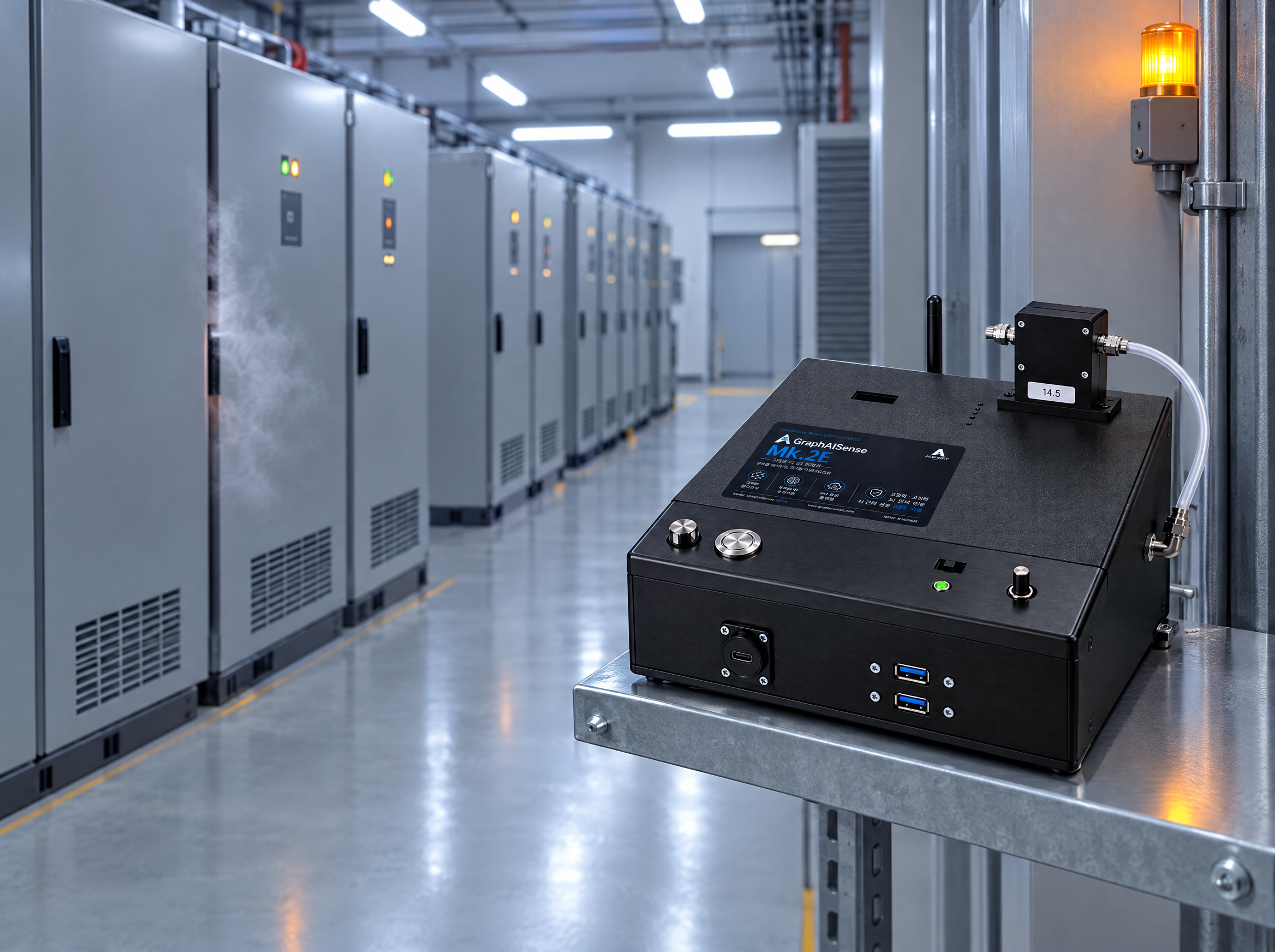
The shipping instrument. A graphene multisensor chip reads the mixture across 30 to 38 channels at once, and the Model Pack that interprets it runs on the instrument itself — measurement, recognition and local alarm complete at the edge.
Multisensor chip
EN-MSC.3E graphene multisensor chip
Sensing channels
30 to 38, depending on configuration
Measurement cycle
2 seconds or less, all channels
AI inference
Under 1 second, on the instrument — no GPU, no cloud
Limit of detection
1 ppm general; 0.1 ppm for selected analytes under verified conditions
Air sampling
Built-in pump · 0.2 to 1.5 L/min · automatic solenoid flow control
Operating conditions
−5 to +50 ℃ · 20 to 98 %RH, non-condensing
Dimensions · power
270 × 250 × 90 mm · AC 220 V · 75 W or less
Connectivity
Ethernet · Wi-Fi · LTE · USB / MQTT over TLS · REST · OPC UA · Modbus TCP/RTU
Alert states
NORMAL · WARNING · ALARM, confirmed by continuous judgement
Mk.2E as published in the 2026 catalogue. Performance figures are ADVENT’s own verification results under the stated conditions, not accredited third-party certificates.
See the full Mk.2E specificationText, image and audio models arrived with archives already behind them. Odour had none. Every usable olfactory dataset has to be produced — measured under known conditions, labelled against a real event, and kept comparable across sites and across time.
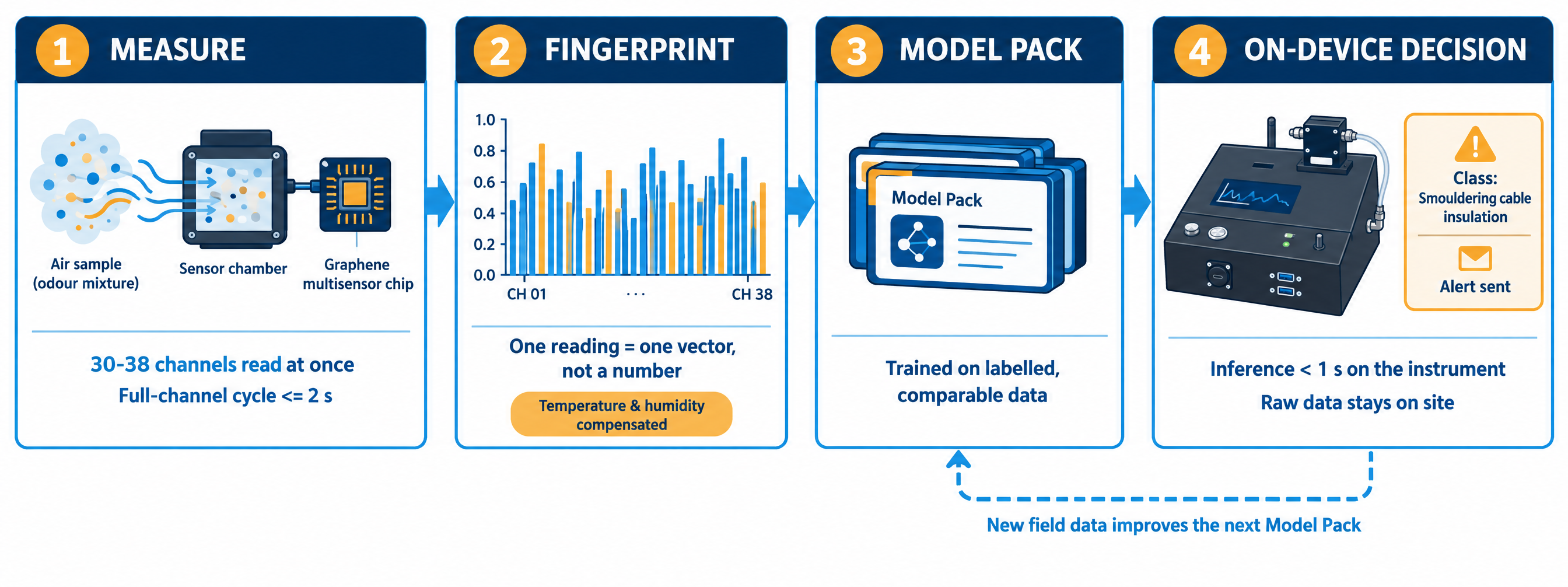
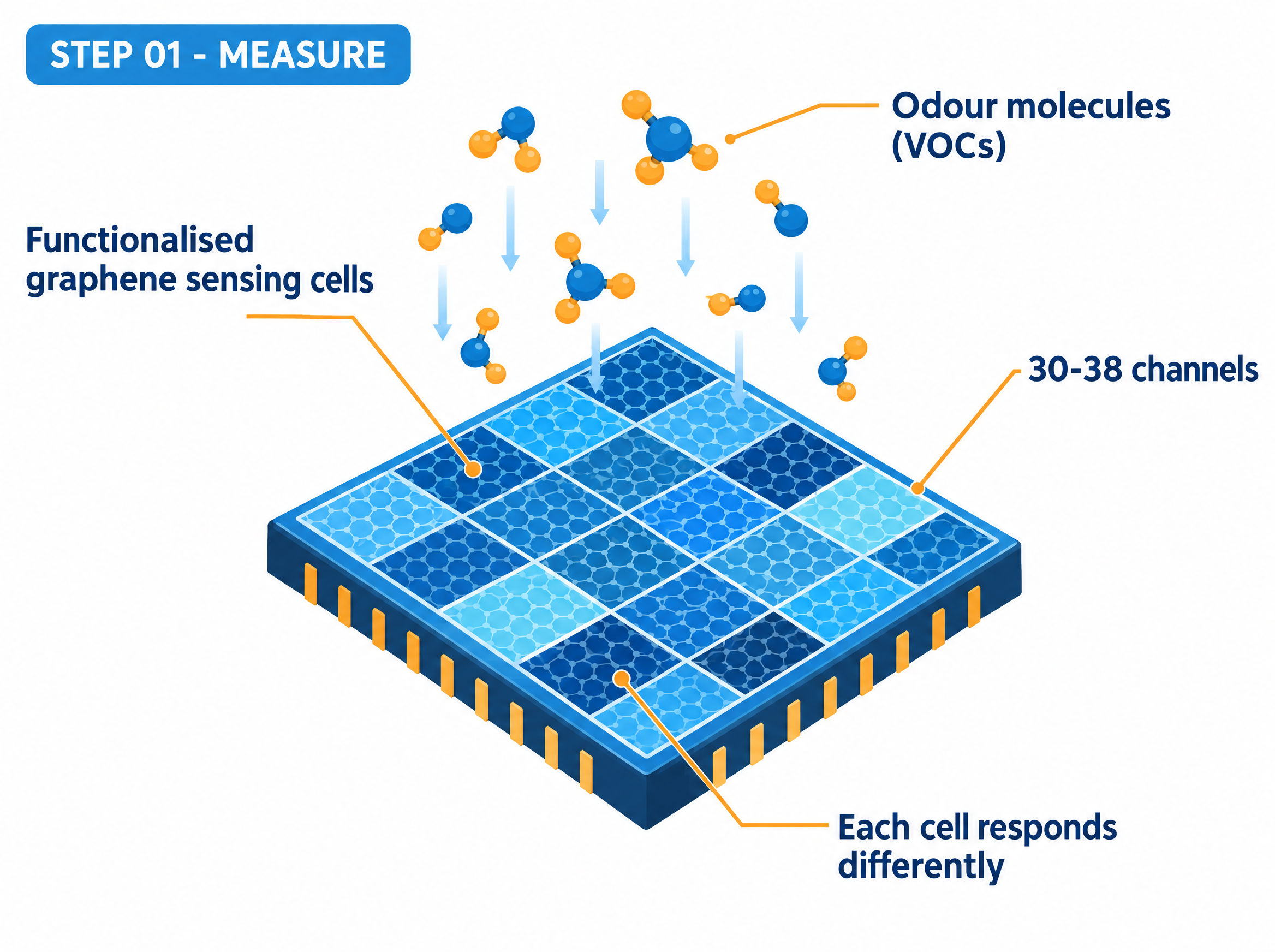
A graphene multisensor chip reads the mixture across 30 to 38 channels at once, on a repeatable cycle. One reading is a vector, not a number — which is what makes it trainable at all.
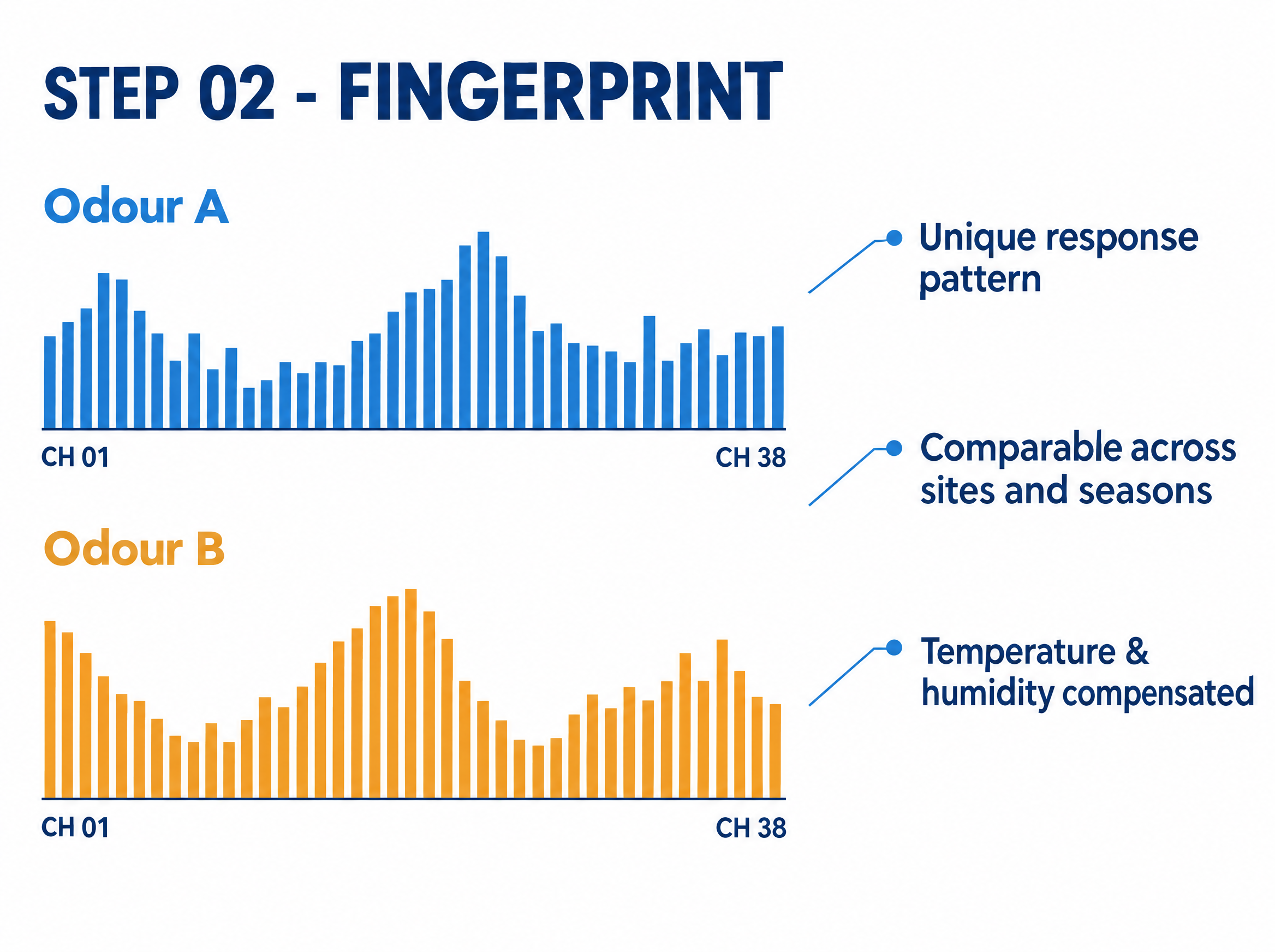
Those vectors become an odour fingerprint — a pattern that stays comparable between batches, between sites and across seasons, with temperature and humidity accounted for. Comparable is the whole point: data that drifts is not data.
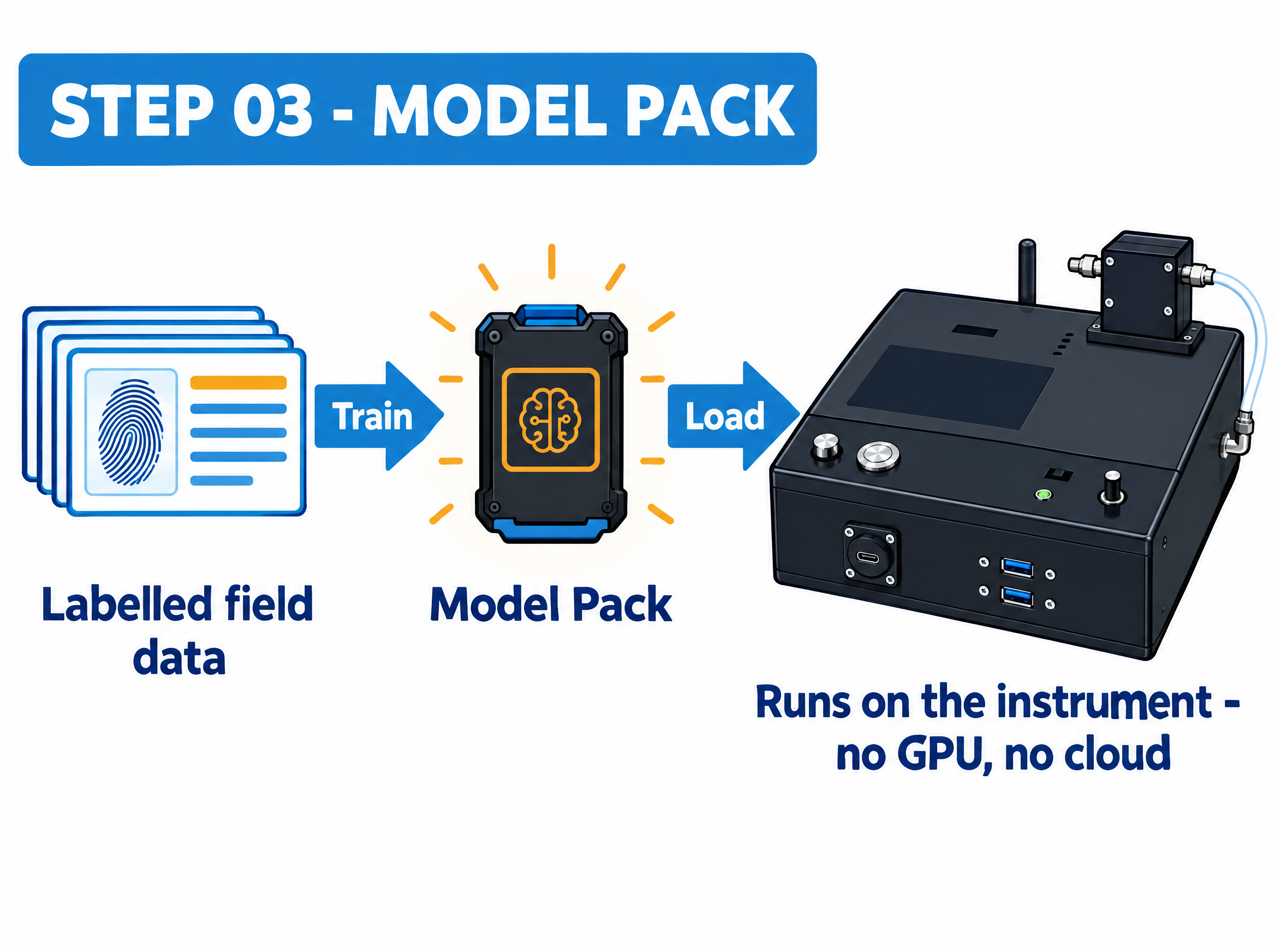
Fingerprints train a Model Pack for the question at hand, and it runs on the instrument itself. No GPU, no cloud, and the raw data does not have to leave the site to be useful.
A single gas sensor returns a scalar — did some value cross a threshold. Because every sensing cell on the graphene chip is functionalised differently, one exposure produces a different response on each channel at the same moment. That distribution is the fingerprint, and it is the vector, not the scalar, that makes a mixture separable.
Schematic, drawn to explain the principle. Not measured data.
The recognition algorithm
Each exposure is read two ways: as a shape across channels (polar view) and as a response over time (2D view). The resulting vector is corrected, reduced with PCA, separated by class with LDA and classified with SVM — then weighed against persistence to give one of three alert states: NORMAL, WARNING or ALARM.
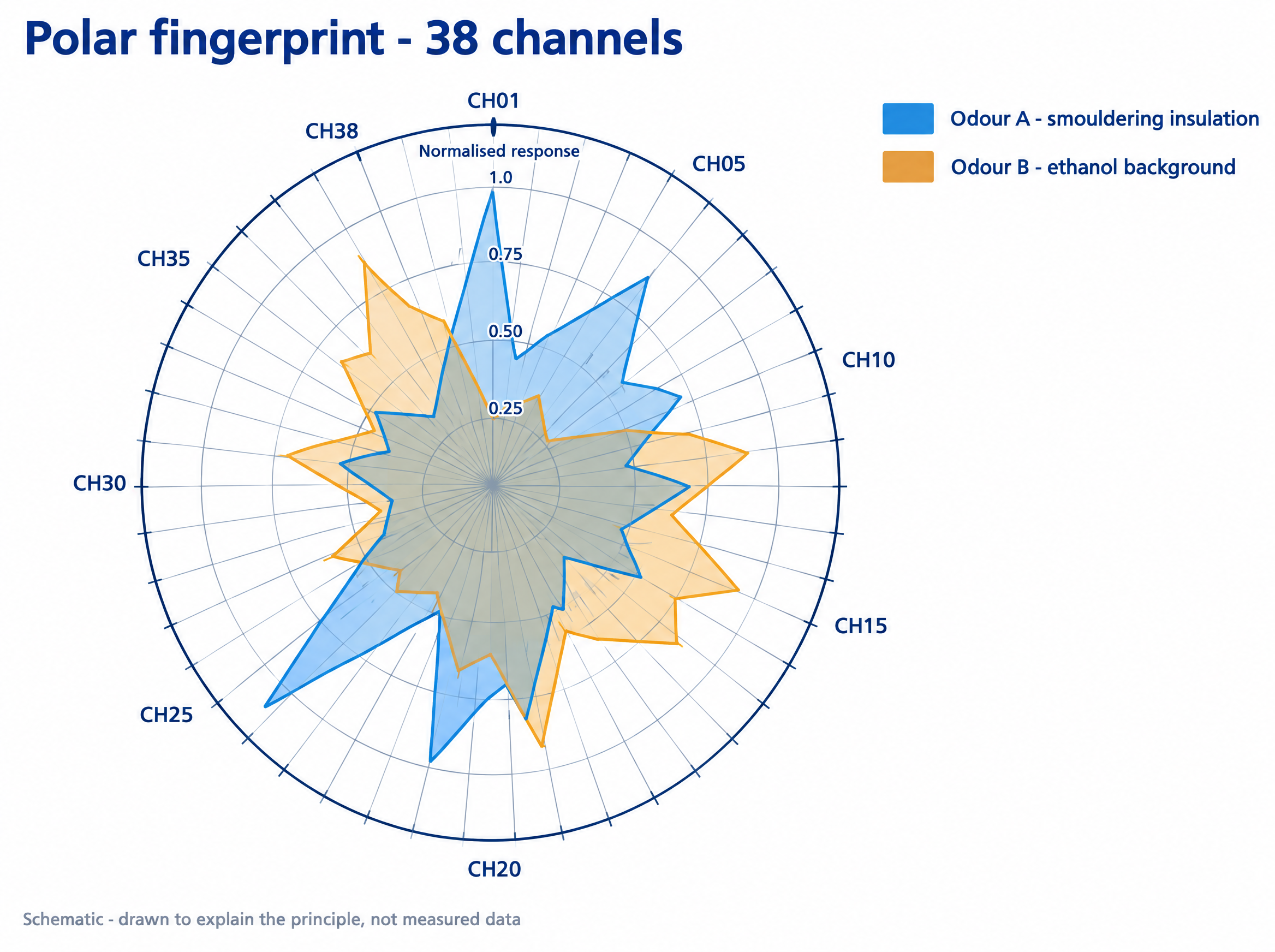
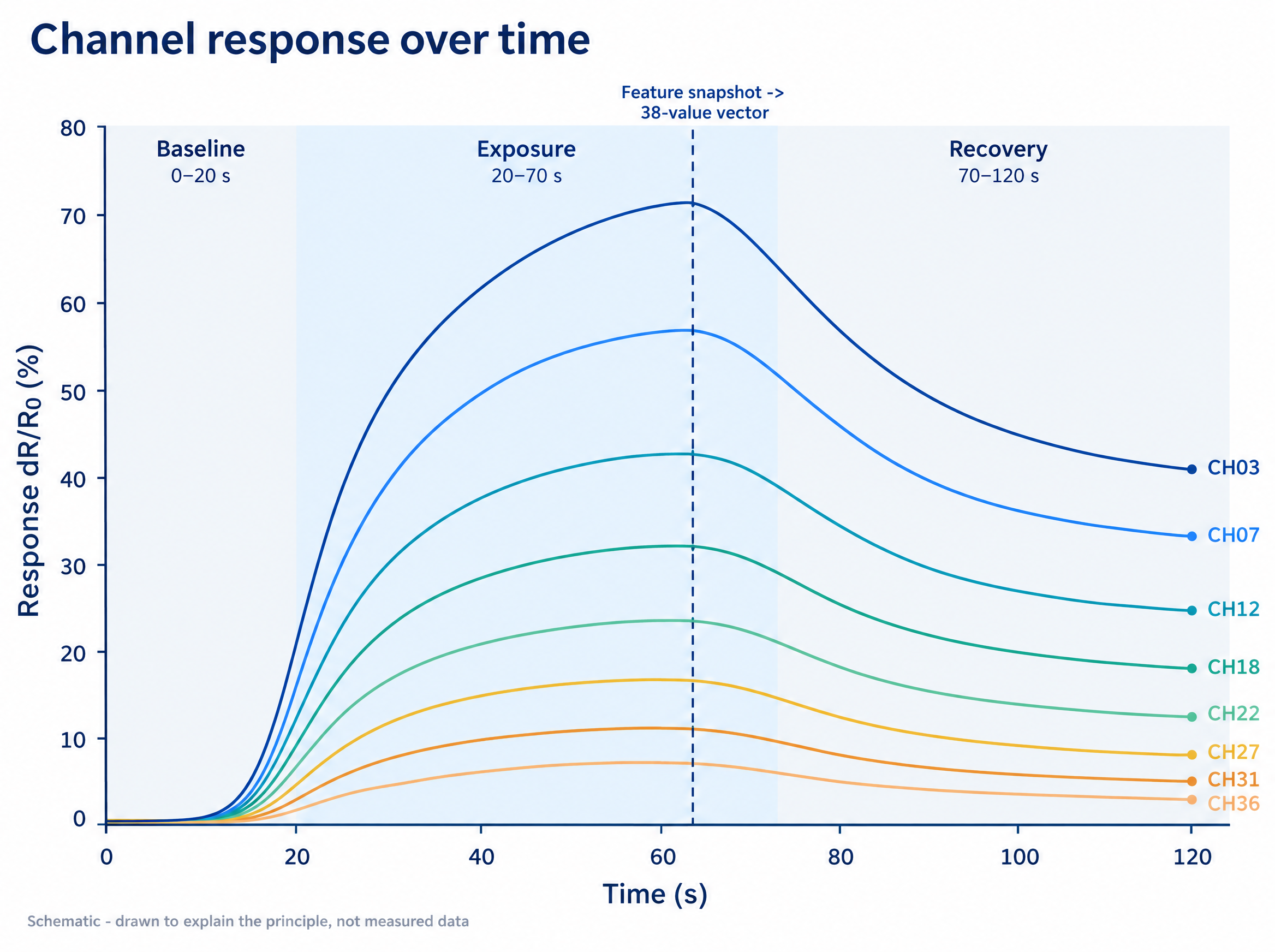
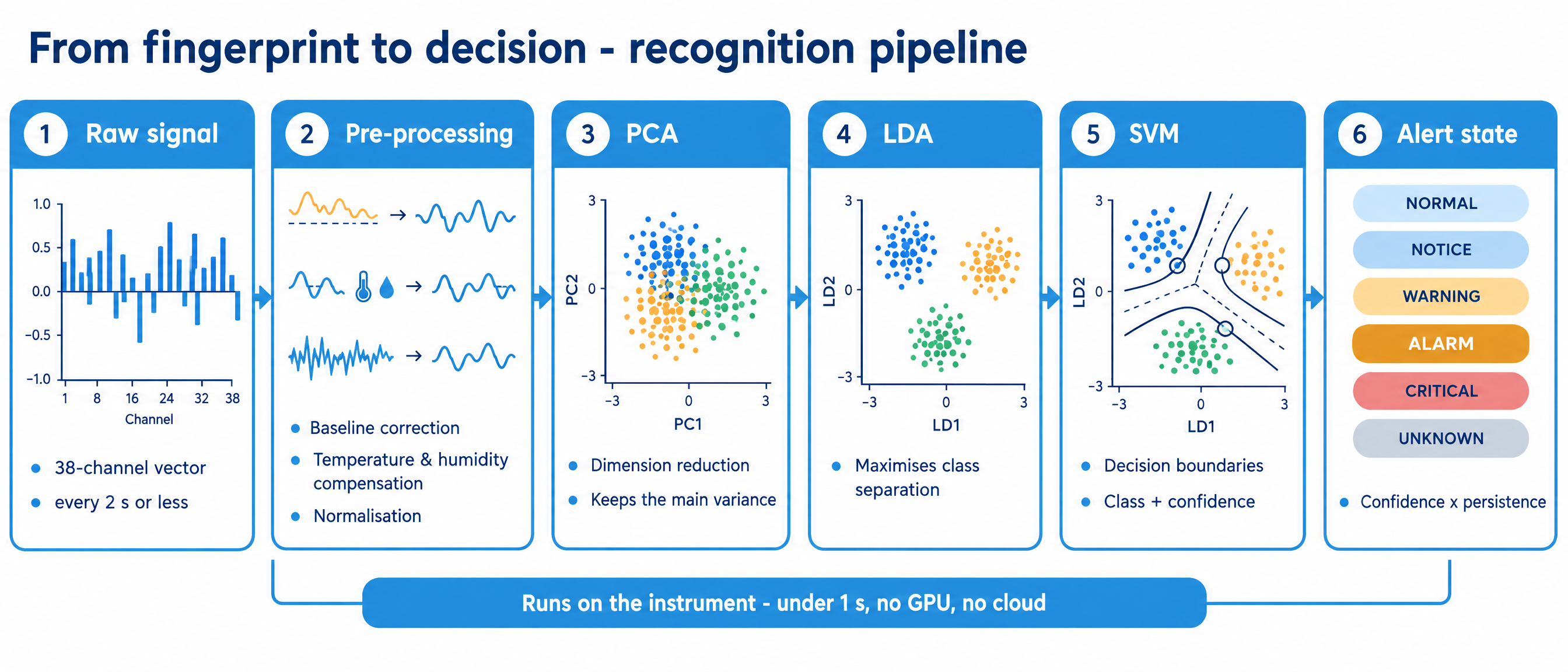
Schematic, drawn to explain the principle. Not measured data.
The web wrote the corpus that language models learned from, and photographed the one that vision models learned from. Nothing on the internet smells. Every olfactory dataset that exists was produced by an instrument someone placed in a real location — so this data accrues only to whoever is measuring. It cannot be crawled, bought in bulk, or convincingly synthesised.
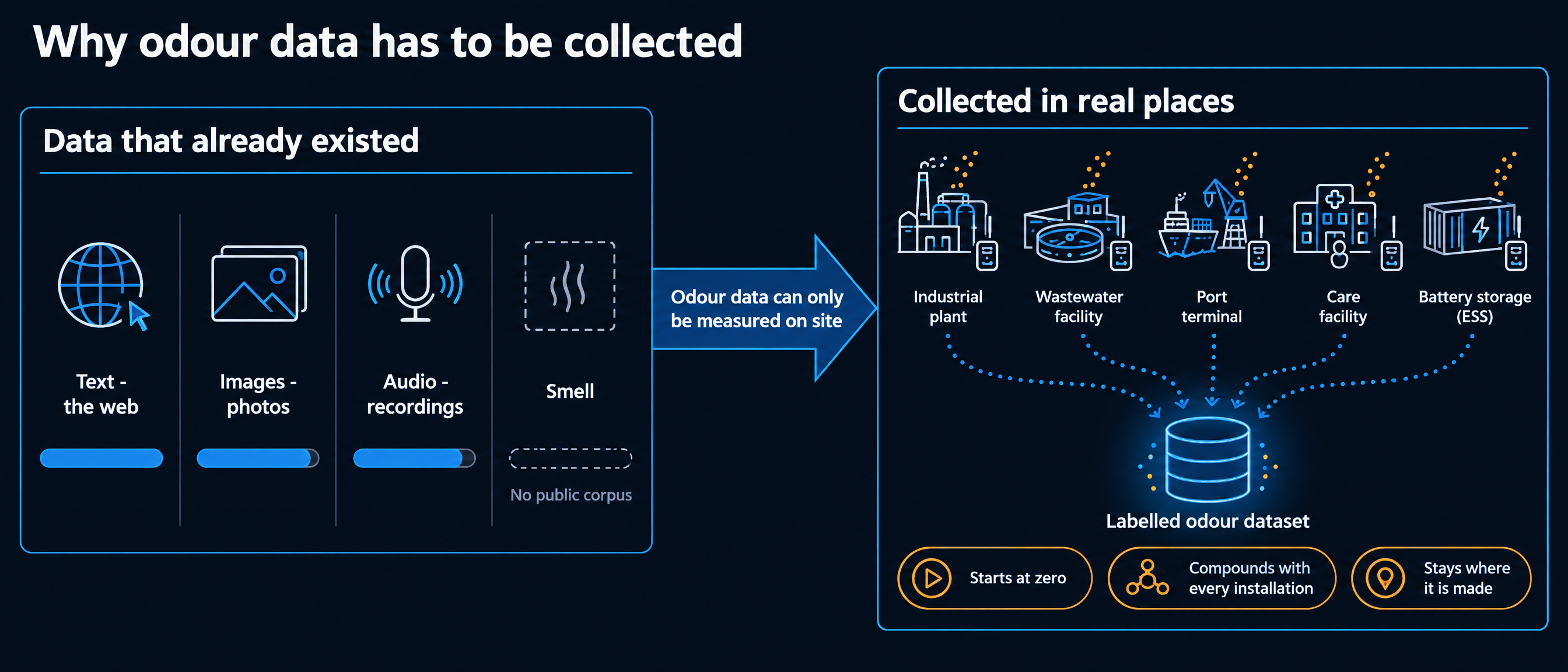
No archive to download, no public benchmark large enough to carry a product. Everyone starts at zero. What separates one position from another is how many hours of real, labelled air have been collected — and whether those hours are comparable to each other.
An installed instrument keeps measuring the same place through seasons, shifts and process changes. That record is what turns a first deployment into a Model Pack, and a Model Pack into one that holds up on the next site. Data collected today makes the next deployment cheaper.
Inference runs on the instrument, so the raw signal does not have to leave the site to be useful. The operator keeps their data. That is what makes restricted places — plants, care facilities, public infrastructure — reachable at all.
A Model Pack is software, not a variant of the machine. Entering a new question — a new material, a new failure mode, a new site — means collecting data and training a pack, not redeveloping the instrument. Five areas are in the field today; the architecture puts no ceiling on the number, and the hardware cost base does not grow with it.
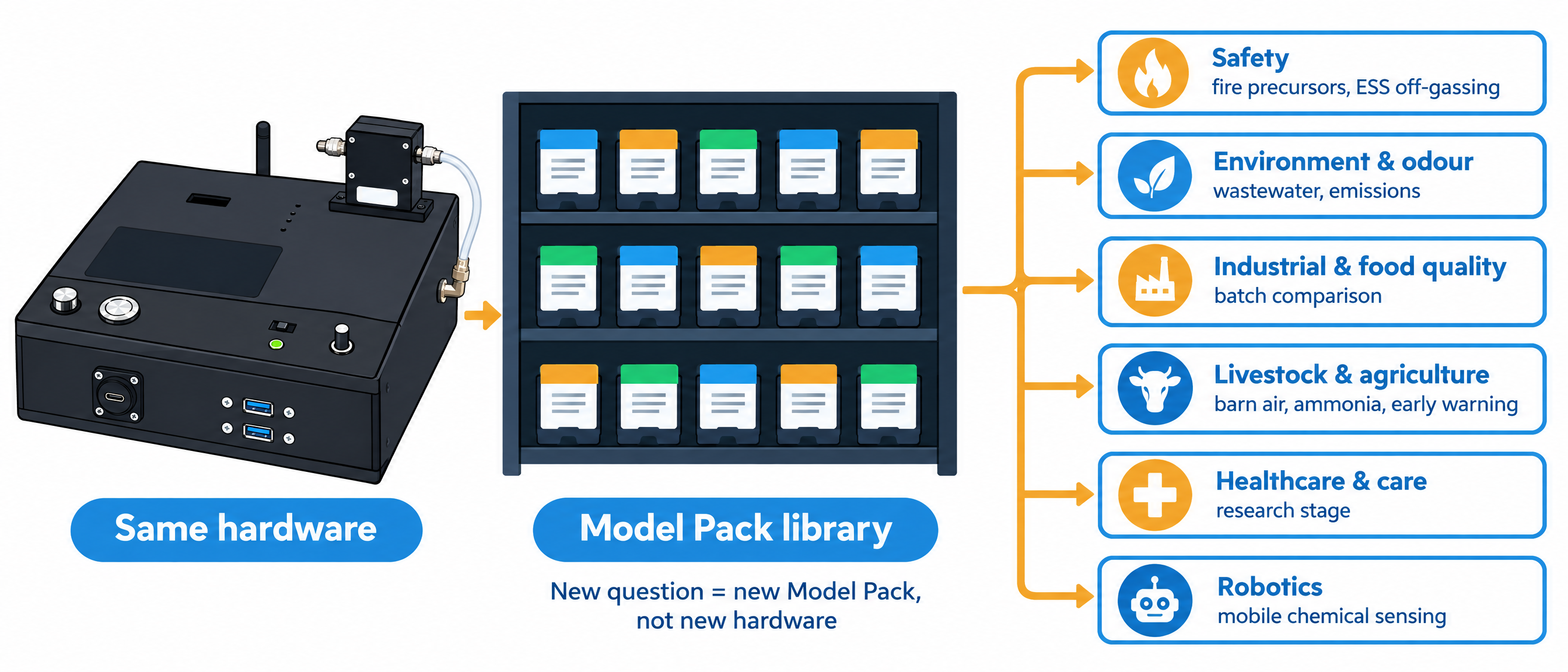
Electrical fire precursors, cable insulation smouldering, and lithium battery or ESS thermal runaway off-gassing — chemistry announces the fault before smoke or temperature does.
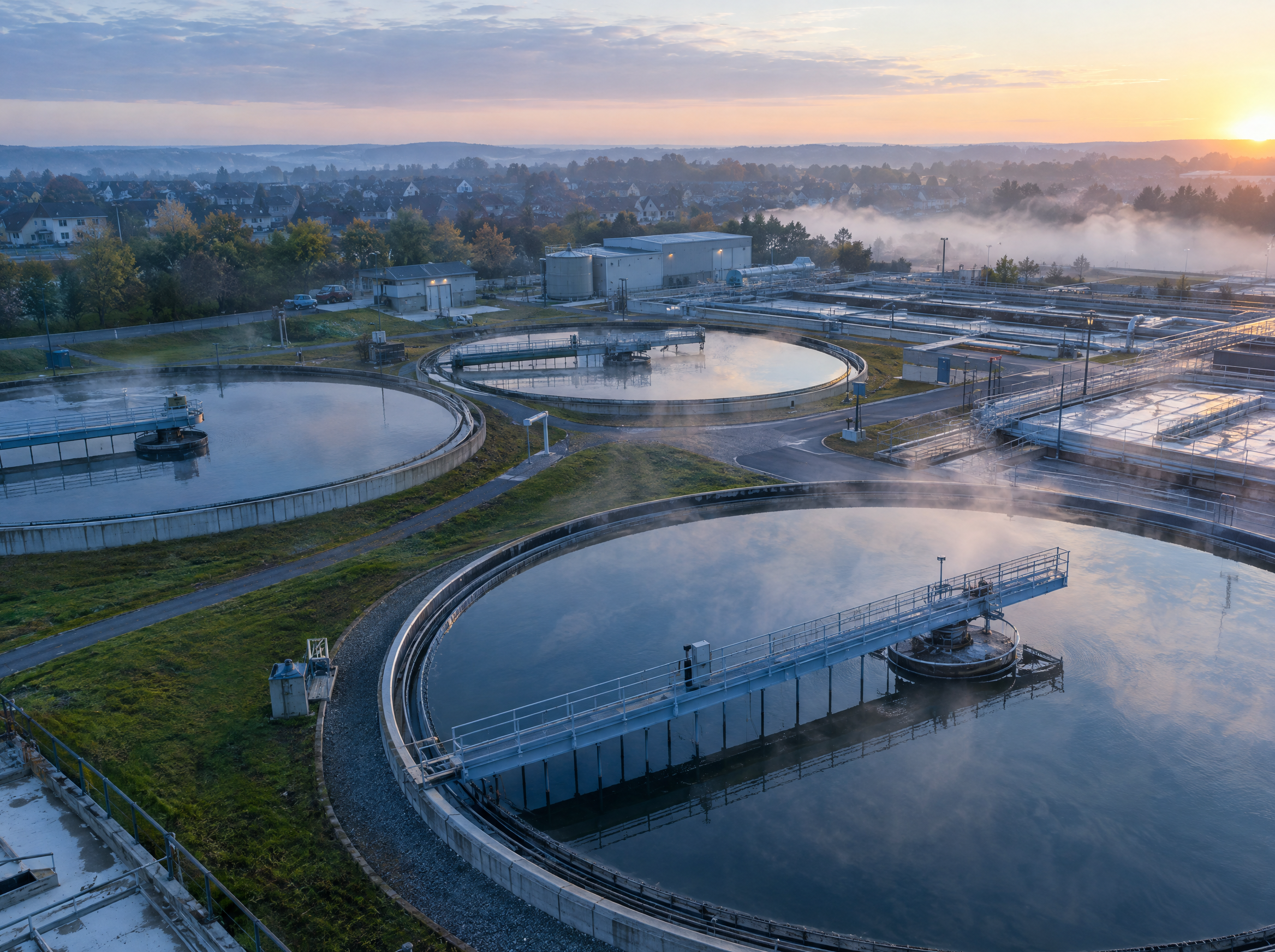
Industrial complexes, wastewater and sewage facilities, emissions and odour-complaint monitoring.
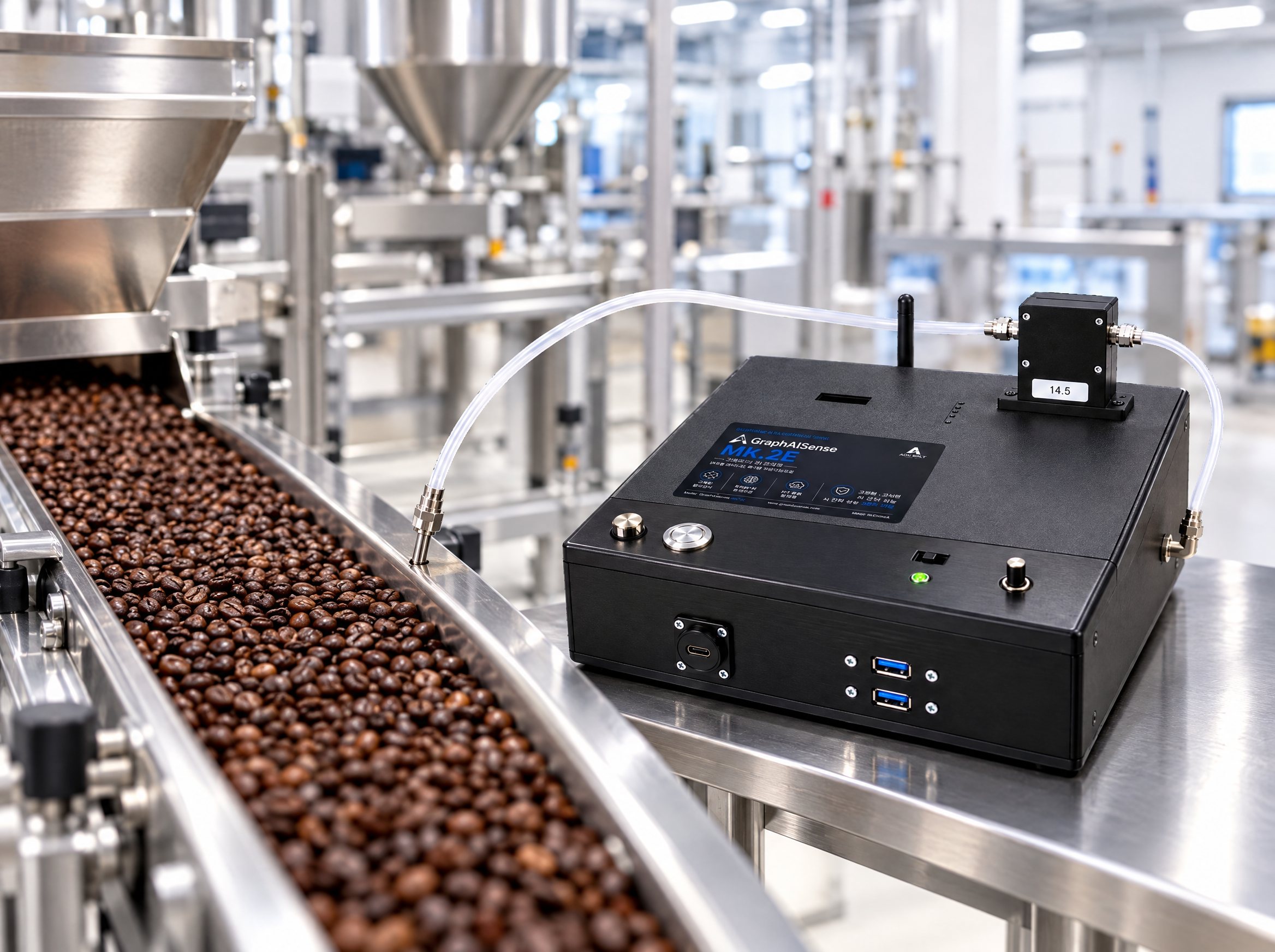
Batch-to-batch comparison, process drift, ingredient and product checks on the line.
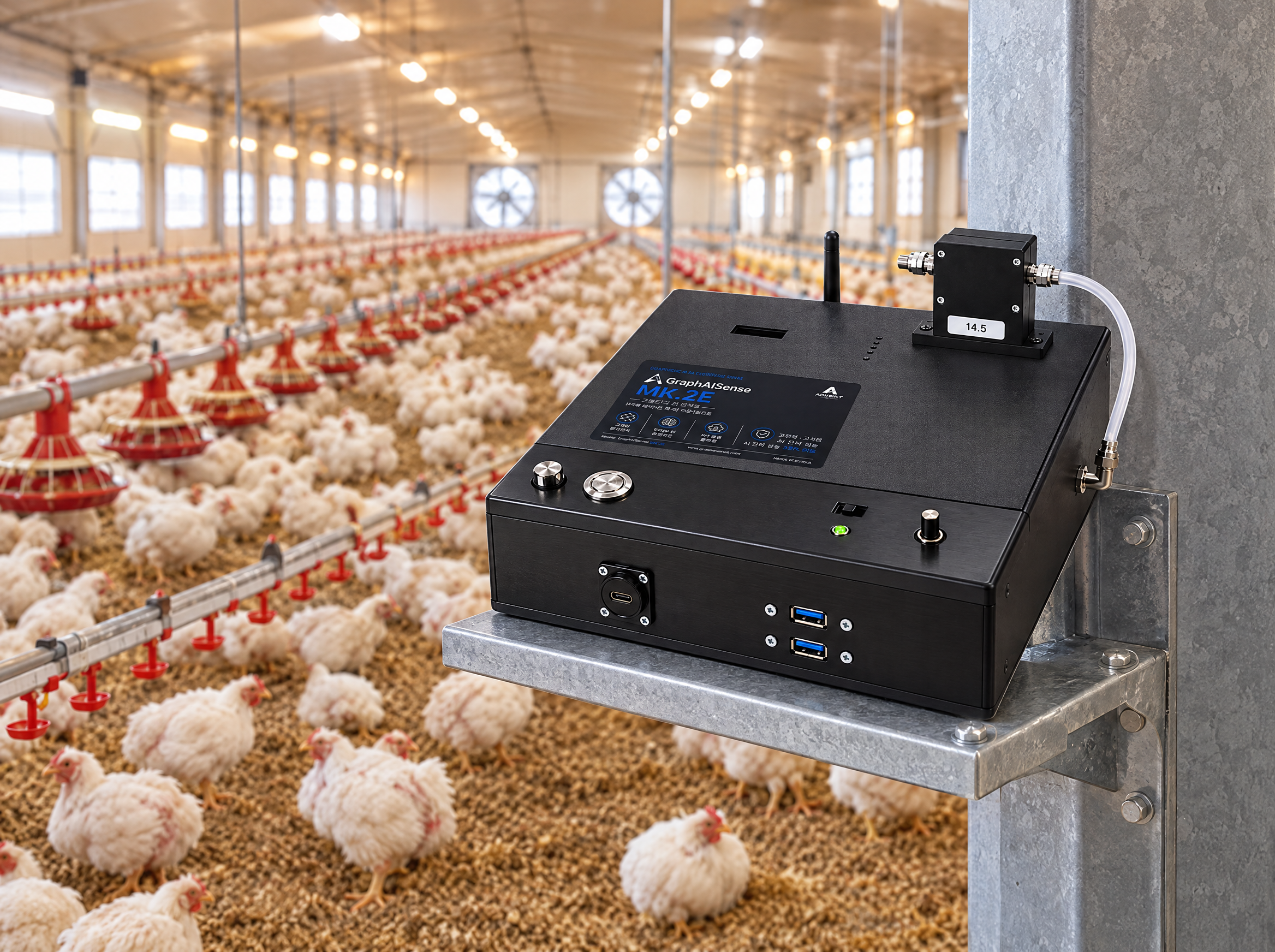
Barn and poultry-house air: ammonia and odour load, early fire precursors, and early warning signs in animal housing.
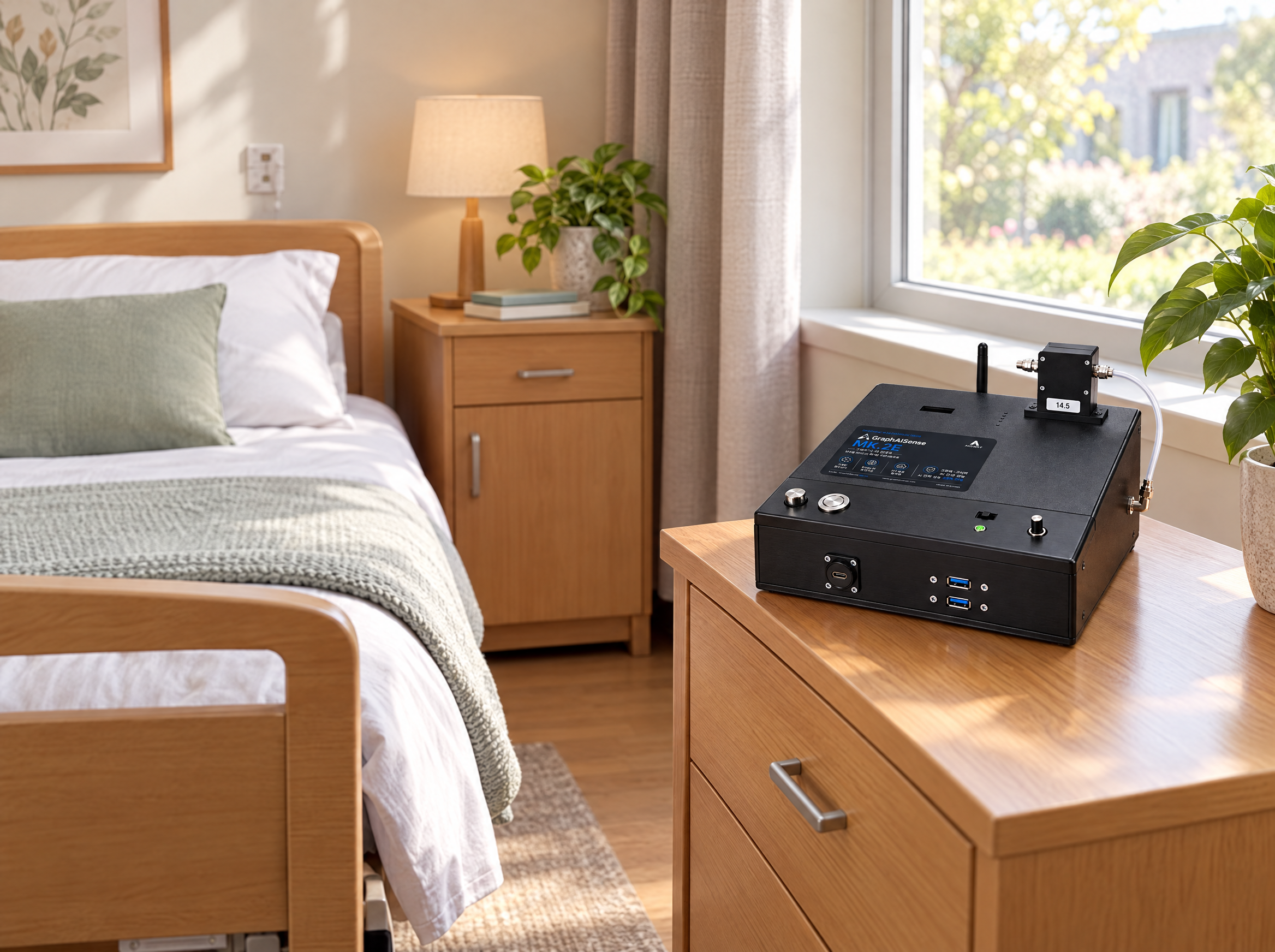
Scent-signature research for screening and care settings.
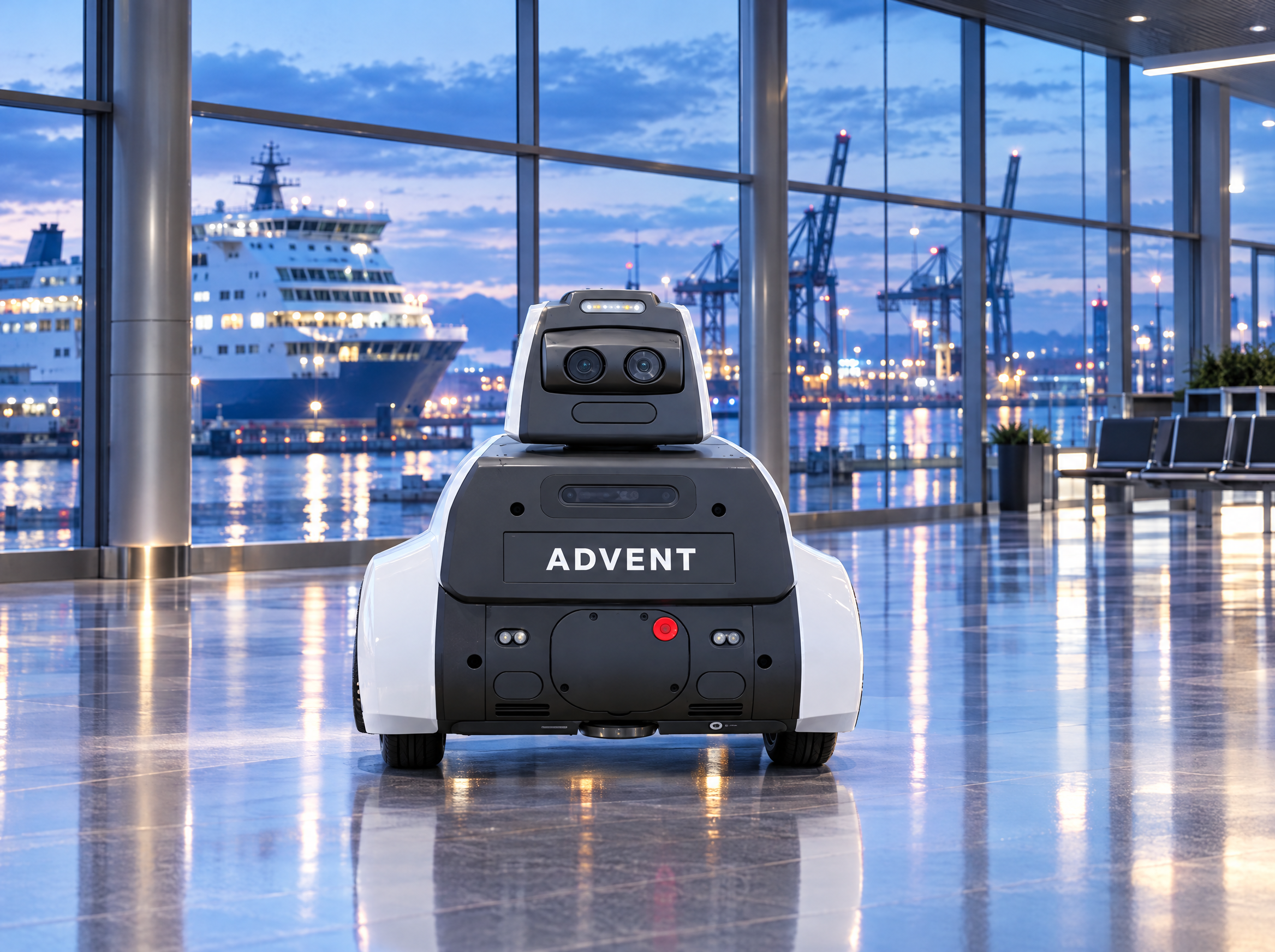
A chemical sense of place and material identity for mobile platforms.
These are ADVENT’s own verification results under the stated conditions. They are not accredited third-party test certificates, and neither result should be generalized into an overall accuracy figure.
Smouldering wire insulation as the target, against chlorine, ethanol and isopropyl alcohol as three background chemicals. The target was correctly identified across that test set.
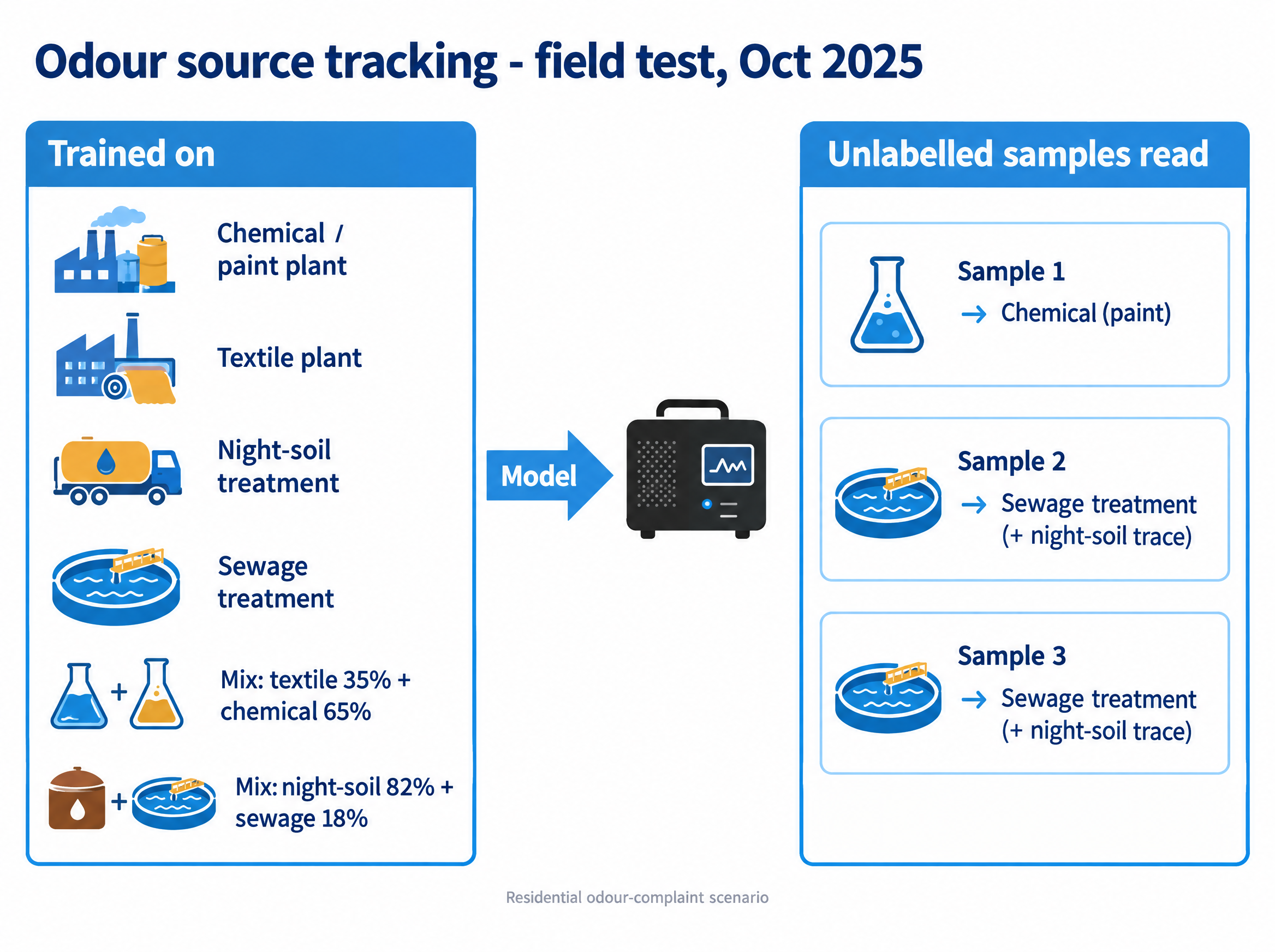
Chemical, wastewater and sewage odour classes separated with high accuracy, and a mixed sample resolved into its two components.

Korea Environment Corporation (K-eco)
October 2025
Trained on four source odours (chemical/paint, textile, night-soil and sewage treatment) and two mixtures; three unlabelled samples were traced back to their sources.

Incheon Port Authority

2026 · In progress
Port passenger terminal: an e-nose built into a SEO Robotics patrol robot, alongside fixed units at energy-storage and solar facilities.

Gyeonggi-do

2026 · In progress
Gyeonggi-do with Suwon, Hwaseong and Icheon: e-noses linked with AI CCTV and edge AI to catch fire precursors in industrial complexes and markets.
Partners are named to identify where each field trial runs. Naming does not imply endorsement, and these are not purchase or delivery records.
Read the full validation and deployment record
We give AI the sense of smell.
GraphAISense is the product brand. ADVENT is the maker.
Headquarters #909, 28 Digital-ro 33-gil, Guro-gu, Seoul
R&D Center #420, 237 Yangji-ro, Sosa-gu, Bucheon-si, Gyeonggi-do
Plant 144-6, 3·1manse-ro 281beon-gil, Jangan-myeon, Hwaseong-si, Gyeonggi-do
ADVENT USA · US sales 8 The Green #22818, Dover, DE 19901, USA
Business registration 522-81-03199 · CEO Choi Chang-hee
Performance figures are ADVENT’s own verification results under the stated conditions; they are not accredited third-party certificates and must not be generalized as overall accuracy.
GraphAISense is a complementary monitoring channel. It does not replace statutory fire protection systems, legally mandated measuring instruments, or a battery management system.
Healthcare and care applications are at research stage. GraphAISense is not a diagnostic product.